

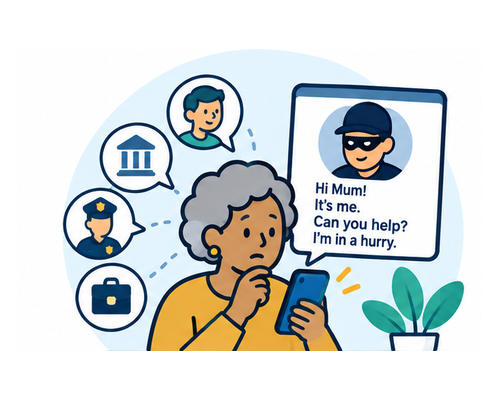
Impersonation
A message, call, voice note or video appears to come from someone you trust — a relative, manager, bank, police officer or public figure.
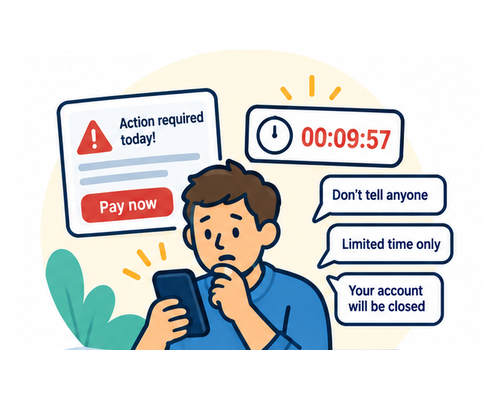
Urgency and pressure
You are told to act now, keep it secret, bypass normal checks or move money before you have time to think or verify.
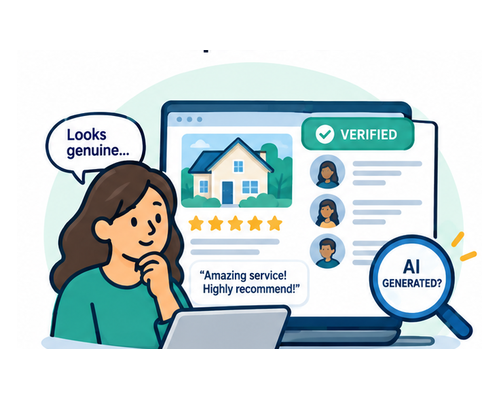
Synthetic trust signals
Fake reviews, generated customer photos, cloned profiles and polished AI content can create the impression that a product or opportunity is widely trusted.
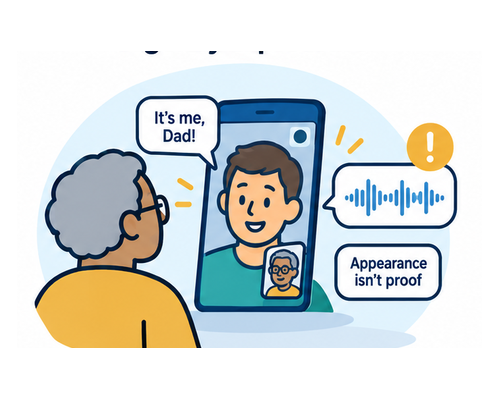
Voice clones and deepfakes
A familiar voice or face is not proof of identity. Move verification to another trusted channel before acting on an unusual request.