
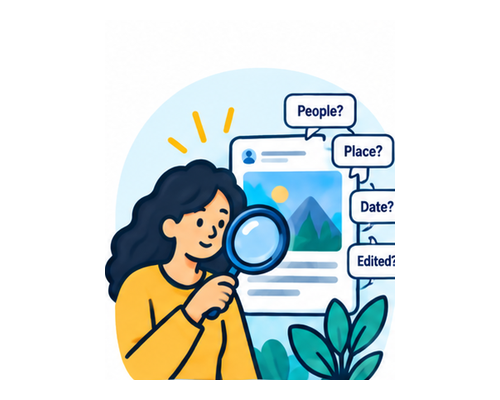
LOOK
Notice what seems unusual — without treating it as proof.
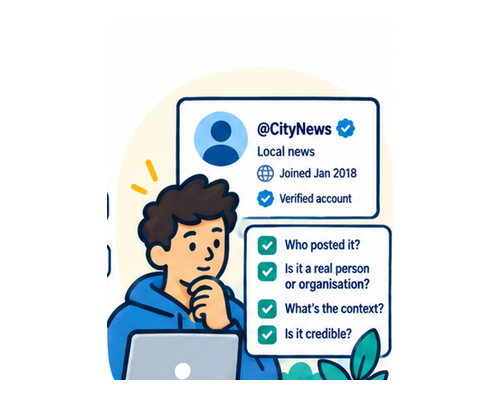
SOURCE
Find the original account, publisher or context.
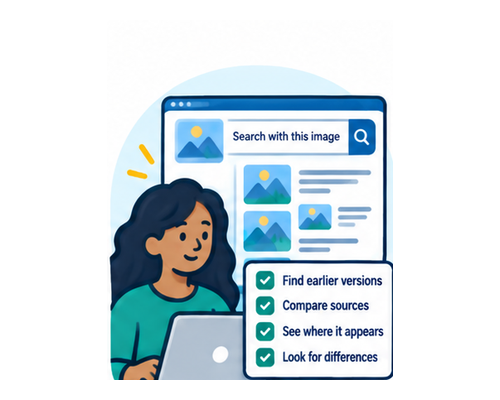
SEARCH
Look for other copies, reporting or earlier versions.
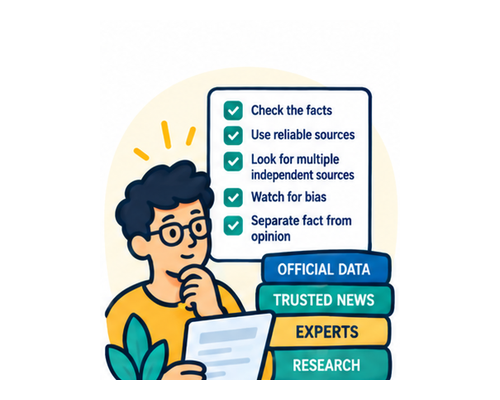
VERIFY
Cross-check claims with trusted independent sources.
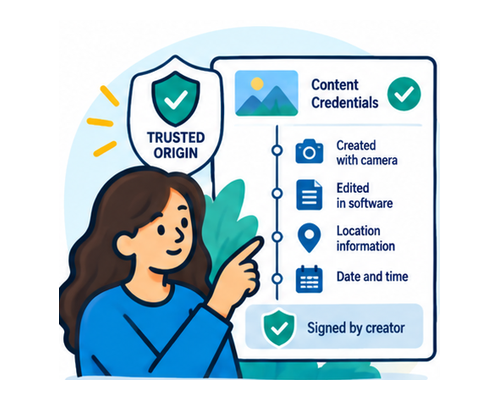
PROVENANCE
Check Content Credentials, metadata and origin signals when available.
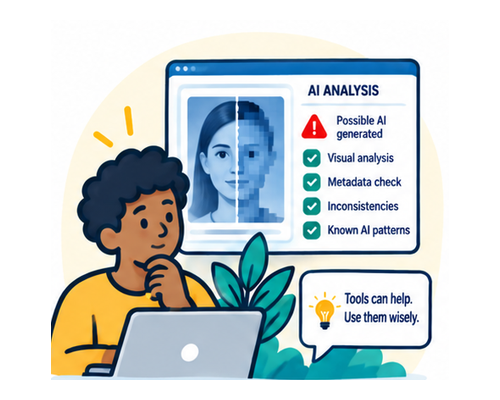
DETECT
Use detectors as supporting evidence, never as an oracle.
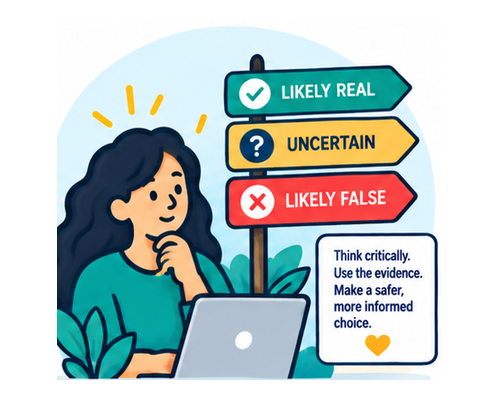
DECIDE
Judge the evidence, risk and safest next action.
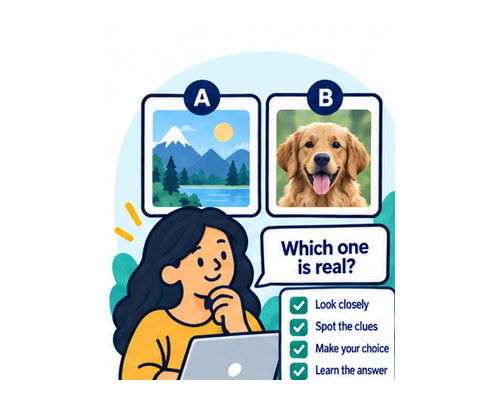
Real or AI?
Compare authentic and synthetic images, then learn why visual guessing alone is unreliable.
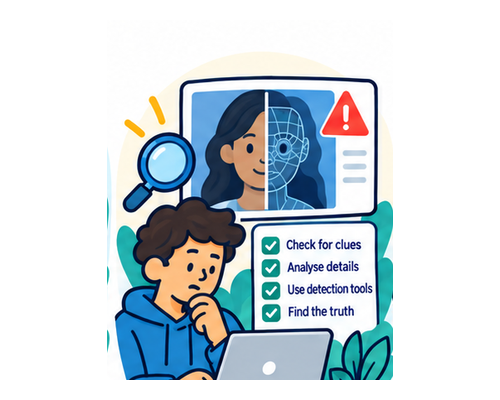
Deepfake Detector Challenge
Test detector outputs and learn about compression, false positives and why confidence scores need context.
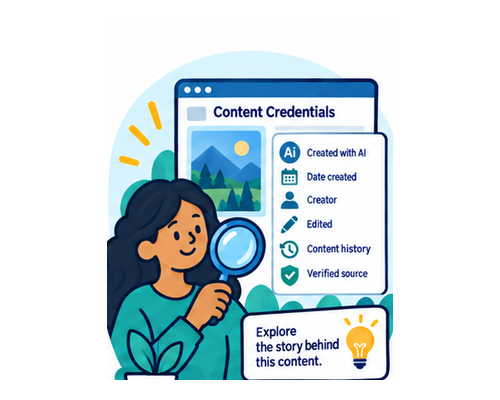
Content Credentials Explorer
See what provenance information can reveal about how a digital file was created and edited.
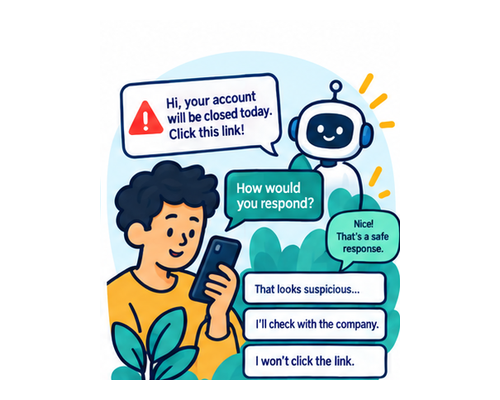
Scam Conversation Simulator
Practise responding to urgency, impersonation, investment and payment-pressure tactics in a safe environment.
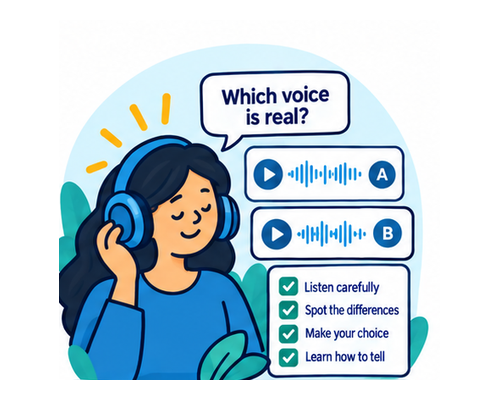
Voice Clone Challenge
Hear how convincing synthetic speech can be and learn safer ways to verify an urgent caller’s identity.
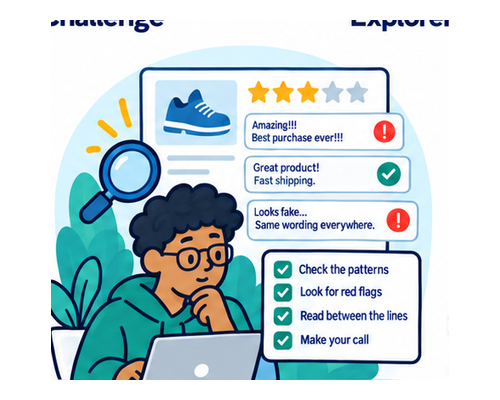
Fake Review Detective
Investigate reviews, seller signals and synthetic profiles without relying on one suspicious phrase or image.
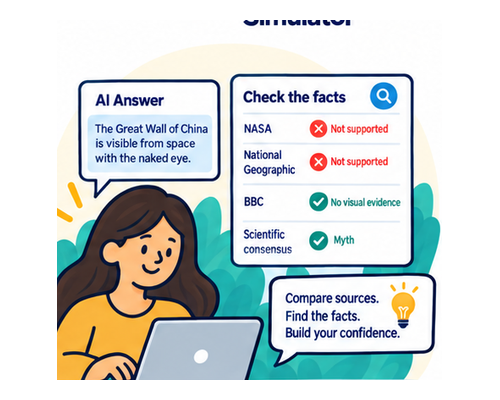
AI Answer Checker
Learn how to test an AI answer against sources, uncertainty and the consequences of getting it wrong.